Showing posts with label surrender. Show all posts

Monday, January 1, 2018

A New Year's Leap of Faith

If you follow me on Facebook, you will know that I am in the midst of preparing to leave the Southwest (where I have spent most of my time in the US) to move to the Pacific Northwest. As I have done so many times in the past (and have documented in my Acts of Surrender memoir), I am leaving with very little as I once again launch a new life for myself in a new place.

I don’t know what awaits me in Portland. All I know is that the call to move from the stark, monastic beauty of the high desert to the lush luxuriance of river and forest is one that I cannot ignore...even as it requires me to take what feels to be the greatest leap of faith I have ever taken. And I have taken many!

From the first big one, more than three decades ago when I left my hometown, until the one that returned me to Albuquerque from Southern California seven years ago, each major leap has required more courage than the one before.

Courage, of course, is not the absence of fear. It is the ability to move forward in spite of fear. When in my first novel, The MoonQuest, Toshar is called to feel his fear, then pass through it to the other side where his destiny awaits, his fear-to-destiny journey was mine. 


With each of my leaps into the unknown, the "destiny" that has awaited me has been nothing that I could have (consciously) imagined. A new life in a new country? I never (consciously) wanted to live in the United States. A wife and daughter? I was a gay man with no (conscious) interest in parenthood. A teacher, speaker and coach? Not (consciously) interested. Fifteen books (and counting)? Hell, back in my teens, writing was the last pursuit I would have (consciously) chosen!

This next leap, my move to Portland, will be no different. As my stories do in the writing of them, my new life there will reveal itself to me in the living of it. As with my books and stories, I have no outline or game plan for Portland. I have a place to land – for a month, at any rate – and the rest will make itself known in the same magical, miraculous, synchronistic way that my life and stories have always unfolded.

Yet even as I surrender into the unknowingness and unknowable of what lies ahead, I still enter 2018 with certain hopes, desires and intentions (in as detached a way as I can manage!). On a professional front, these mostly revolve around both my own storytelling and my work helping others with theirs...helping you with yours – as a teacher, facilitator, coach, mentor and catalyst.

These are my passions, and I look to 2018 and my presence in Portland to fire them up, express them and get them out into the world – to you – in new and exciting ways.

By the way, "stories" can take many forms. If the written form is the most literal, it's not the only one. A story can express itself on an artist's canvas, on a potter's wheel, on a composer's notation paper, through a photographer's viewfinder or on a filmmaker's reel. It can express itself on a stage, on a screen or in a studio. It can also express itself in a kitchen or garden, or in a workshop or machine shop. More than that, even, it expresses itself every day as the story of your life.

How it will express itself in my life as I take my leap of faith into this next phase of my journey remains to be seen, even as I have little doubt that continuing to tell my stories and to work with you to help you tell and/or live yours will remain an integral part of it. However it plays out, I hope that you will remain an integral part of my story and that I will also remain an integral part of yours!


The year just ended was a challenging one for many. May this new one usher in an end to fear, dread and struggle. May it be a year of renewed hope, rekindled optimism and an abundance of joy, laughter and the fullest expression of your heart’s desire! Happy 2018!!!



Sunday, May 15, 2016

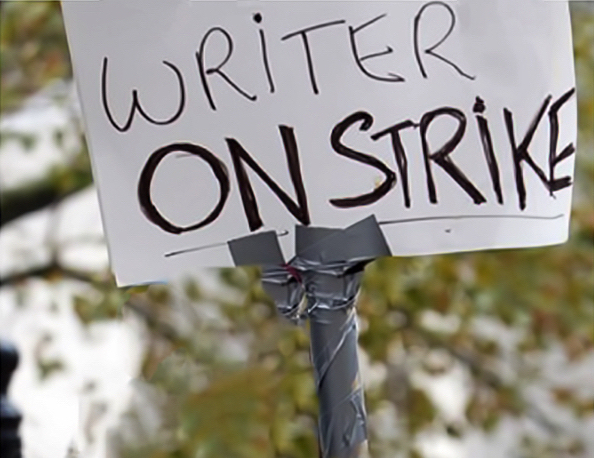
How I Tried to Give Up Writing...and Failed

"I can't do this anymore. It's too emotionally draining. As soon as I finish with this draft, I'm closing the door on my writing 'career.' I'm not a writer anymore. It's over."

It's August 2013, a few weeks before my 59th birthday, and I'm about two-thirds through a first draft of my stage-musical adaptation of The SunQuest, the third story in my Q'ntana Trilogy. I've been at this nonstop for six weeks now. I started with The MoonQuest, the first story, and have continued straight through The StarQuest and into The SunQuest. I still have a fair bit of work left on this trio of initial drafts and I'm beyond burnt out.

For more than two decades, I have treated writing as a spiritual pursuit, writing from the deepest inner places I have been able to access and, as the title of my memoir suggests, surrendering more and more fully with each project to what I view as my highest imperative. This is also what I've taught – in my books for writers as well as through my coaching, classes and workshops.

But on this day, it feels as though I have sacrificed too much for too little return: My book sales are poor, my coaching income is negligible, I no longer have a home or car of my own and the emotional pain of digging so deep has grown unbearable.

On this day, my only commitment is do whatever it takes to finish this draft of The SunQuest so I can bring my trilogy of stage musicals to completion.

Two weeks later, as soon as I ring down the final curtain on The SunQuest and my Q'ntana musicals, I declare to my housemate and my closest friends that I'm on strike. "If I'm going to return to writing," I insist, "something has to shift. Otherwise, I'm giving it up. The work is much too hard for so pitiful a payoff."

My friends, some of whom are writers themselves, make sympathetic noises. I'm certain that they don't doubt my sincerity, but I suspect they doubt my determination. "Let them doubt," I mutter as I settle into a diet of Netflix movies and murder mysteries. "If nothing changes, I'm not going back."

My sole concession is to a pre-strike interview I conducted with New York Times bestselling mystery author J.A. Jance the previous month (see below). Because Jance was so generous with her time, I commit to editing the interview and posting it to YouTube as the sole writing-related interruption to my job action.

About 34 minutes into our recorded conversation, as we're talking about craft, I tell Jance how much I love that she never outlines her books because I don't either.

"I have to sort of step out with faith," she says, "that if I can write the first sentence of the book, I can eventually get to the end of it."

"Shit," I say out loud – not to J.A. Jance in the interview, but to the recording I'm editing. The moment she talks about the faith that gets her from her first sentence to her last, I know that my strike is over.

My creative and spiritual lives have always been inextricably linked, and both have been built on a solid foundation of faith.

My faith, as I describe it in Acts of Surrender, is not about submitting in any kind of demeaning fashion to some white-bearded, white-robed gentleman peering down from on high. "Rather," I write in the book, "I acknowledge the existence of an infinite mind whose wisdom transcends my conscious thoughts, and I do my best to defer to it. Whatever [that infinite mind] is – and I don’t pretend to have solved the theological and scientific question of the ages – it is something that is both within me and of which I am part. Whatever it is, it is definitely smarter than I am, and that is where my surrender is directed."

As J.A. Jance's words echo in my heart and mind, I realize that if the deepest part of me has determined that I am a writer and that my writing (and all that derives from it) is the most important part of my being, I can't walk away from it. I can't abandon my faith and I can't stop surrendering to it. I am a writer. Period.

I would be lying if I said that I never again doubted and never again half-wished that I could turn my back on the sometimes-onerous demands of my Muse. But every time I'm tempted, I remember my 2013 writer's strike and the words of faith that aborted it.

In the end, as I'm reminded over and over and over, all that matters is that I'm writing.

The writing has definitely continued since my failed strike; if anything, the pace has picked up. Although I have yet to return to my Q'ntana musicals, I am now at work on my 13th book, After Sara's Year, a reader-demanded sequel to last year's award-winning Sara's Year, itself a story about never giving on your dreams. 

After Sara's Year will be available later this year; meantime, pick up the Sara's Year, the  first installment in what is now The Sara Stories! Look for all my books in paperback or ebook from your favorite online bookseller or signed by me to you from my website.


From my interview with J.A. Jance (if the video doesn't play from the player, click here)...
"I hated outlining in 10th grade geography class and I hate it now. Because I write murder mysteries, I usually start with somebody dead, and then I spend the rest of the book trying to figure out who did it and how come. I have to sort of step out with faith that if I can write the first sentence of the book, I can eventually, 100,000 words later, get to the end of it."


Monday, May 9, 2016

The Act of Surrender That Created Acts of Surrender

In this excerpt Acts of Surrender: A Writer's Memoir, I share the act of surrender that helped birth my memoir into the world...

It’s May 6. I have just finished breakfast, and as I stare into my empty coffee cup, I contemplate my immediate future. It has been less than twenty-four hours since I completed a final draft of my novel The SunQuest and, along with it, an odyssey that has occupied nearly one-third of my life: Eighteen years ago I surrendered to the words that would become the first draft of The MoonQuest, a story I knew nothing about, a story that would launch a fantasy trilogy that I did not yet know existed. Now that I have written “The End,” both to The SunQuest and the trilogy, what’s next for me?


As I stare into that coffee cup, I am certain that another draft of this memoir, of Acts of Surrender, must follow The Q’ntana Trilogy on my creative agenda. How can it not when The SunQuest is, among other things, about Ben’s coming to terms with his past? How can it not when Ben’s story, like Q’nta’s and Toshar’s before him in The StarQuest and The MoonQuest, is also my story? Hardly a day went by, while I worked on The SunQuest, that I failed to notice a parallel between Ben’s life and mine, between what he discovers through reliving his journey on the page and what I have already discovered through living mine on these pages. 

At the same time, I ask myself: Wouldn’t it make sense to wait a month before taking on a new draft of Acts of Surrender? Between the Q’ntana screenplays and novels and the early drafts of this memoir, I have been writing nonstop for nearly two years. Maybe it’s time for a break. Besides, I have a business trip to Las Vegas coming up in a few weeks. Wouldn’t it make sense to wait until I get back? 

You would think that after writing three fantasies where conventional sense is an elusive commodity, not to mention penning two drafts of a memoir that exposes similar threads in my own life, I would have more sense than to ask questions about sense. Apparently, I don’t.

The coffee cup is still empty, and my mind wanders, away from my creative life and on to my life — not that it’s altogether possible to separate the two. I have now been back in Albuquerque for eighteen months. A 2010 move from here to Los Angeles ended after ten weeks, when I felt a call to return to New Mexico. Through this, my third sojourn in Albuquerque, I have become aware how much my life here has come to resemble my 1994-95 time in rural Nova Scotia: a hermit-like existence where little occurs beyond my writing. In Nova Scotia, my focus was on the first two drafts of The MoonQuest; once they were finished, I found myself back in Toronto, my monkish tendencies forgotten.

There is, however, one significant difference between these two periods in my life: In Nova Scotia, I had no conscious desire ever to leave. I thought I had rebirthed myself on the East Coast and, when the call came for me to go back to the big city, I was initially startled and dismayed. Here in Albuquerque, I have never stopped longing to get back to L.A., to resume a life that has felt on hold since I returned here. 

Suddenly, the opening scene of The MoonQuest pushes my mental wanderings aside. In it, the dreamwalker Na’an interrupts an elderly Toshar, who has long resisted writing his story. 

“It is not for me to boast of my exploits,” Toshar argues. But Na’an is firm. “It is your story to tell,” she says. “It is for you to fix it in ink, to set the truth down for all to read.” 

I cannot move on to other realms and set off on other journeys until I have told my story, I hear myself speak out loud, paraphrasing Toshar’s thoughts in The MoonQuest. The words catch in my throat, and I’m gripped by an emotion so strong that I find myself on verge of tears.

I can’t know what those other realms and journeys might be. I can’t know whether, in another parallel to my time in Nova Scotia, they will mark the end of my creative retreat and launch me back into the world’s bustle — this time to L.A. instead of Toronto. What I can do is recognize the charge I experienced and the truth that underlies it: Like Toshar, I must tell my story, this story, or I will not be free to move forward with my life. 

I know one other thing: Whatever the “sense” of the matter, I cannot wait a month to begin. In the act of surrender that is the book, I must make Acts of Surrender my primary focus, and I must begin now...in that realm where all stories begin: Once upon a time...

• An excerpt from Acts of Surrender: A Writer's Memoir (c) Mark David Gerson, available in paperback and ebook from your favorite online bookseller or signed by me to you from my website.


Photos: Coffee mug and L.A. billboard by Mark David Gerson. Flag is the Nova Scotia provincial flag. MoonQuest book cover designed by Angela Farley. Acts of Surrender book cover: Ojai, CA; photo by Sander Dov Freedman.

Tuesday, April 7, 2015

All That Matters Is That I'm Writing

There's a scene in the film Becoming Jane where a fictionalized Jane Austen is considering eloping, a scandalous action at that time, with irredeemable repercussions for a woman's reputation and her ability to function in "decent" society.

"If you do this thing, how will you write?" her sister asks.

Jane shrugs and continues her preparations.

Even though the reasons Jane ultimately changes her mind have nothing to with her writing, the scene touched a nerve for me. Would the Jane Austen of Becoming Jane ever have fulfilled her destiny had she been forced to live the pariah life she nearly chose? Would those six gems of English literature ever have been written?

Later in the film, when Jane turns down a marriage proposal from a wealthy man she does not love, she is asked how she will support herself. "Through my pen," she replies, an outrageously radical notion for a woman of her times.

There's a third scene, earlier in Becoming Jane, where Jane rudely dashes off mid-conversation to jot something down in her notebook.

"What is she doing?" Maggie Smith as the imperious Lady Gresham asks.

"Writing," her nephew replies.

"Can anything be done about it?" Lady Gresham retorts.

Nothing. Not for Jane. And, apparently, not for me.

Those three scenes reminded me of a scene of my own, from my novel The StarQuest (The Q'ntana Trilogy, Book II). In it, the main character must pass through The Coil, a serpentine tunnel in which she will be forced to face her deepest fears. To her surprise, and to mine the moment I wrote the words, her greatest fear is the loss of her storytelling ability.

"How can losing my stories be my nightmare?" she asks. "How can I put my stories before Ben [her son]? What kind of mother am I?"

In the moment of Q'nta's greatest despair, the moment when she realizes that she lost her stories years earlier, she has a painful epiphany.
"Now with increasing despair, I realized that stories had lost their place in my heart a long time ago, when I first lost Ben. Perhaps they might have returned once he did. But he was gone again before I could find out. The void I felt in the center of my chest, I was unnerved to discover, was from much more than Ben’s absence. It was from Story’s absence, an absence I had barely noticed and now grieved far more than I could bear."
Even so, Q'nta is not convinced. Stories may have reignited the moon's light back in her father's time, with The MoonQuest, but they won't bring her son back.

"Are you so sure?" the voice in her heart asks.

Like the Q’nta of my story, I found it inconceivable that writing could be the only thing that mattered to me. Like Q’nta, I have felt parental guilt over my choices. Unlike Q'nta, whose experiences in The Coil offer resolution, it's a question I continue to ask myself. I explored it several times in Acts of Surrender: A Writer's Memoir and many times since. I have been exploring it again since watching Becoming Jane.

In the end, though, as many times as I ask the question, the answer is always the same. It's the same answer Q'nta receives in The StarQuest:

"Your stories are your legacy...to your son, to your companions...to your people...to your land. Your stories are your hands and feet...your bones and skin...your heart and lungs. Your stories are the blood and air that course through you, giving you life. Your stories are life. Without them you are barely alive. Without them you have barely been alive. You were alive, once upon a time, Q’nta. You can be once more...if that is your choice. Is that your choice?"

It was, in the end, for Q'nta. It must be for me, too.

"Whatever’s scaring you now," one of Q'nta's companions urges, "you have to push through it, so we can face whatever’s next. You can’t let it destroy you. If it destroys you, it will destroy us, too." 
I sighed, then inhaled deeply. It felt as though I was breathing in all of the Coil, all of what had brought me here and all of whatever would be next. With a noisy wheeze, I let it all go and focused on those four words that underlay so much of my life and so much of who and what I was. 
"Once upon a time," I began haltingly. My throat closed. My chest tightened. I shut my eyes and continued. "Once upon a time, there was a bard named Q’nta who arrived in M’ranna from a far-distant place. Once upon a time there was an Elderbard named Q’nta. This is her story."
Q'nta's story is also my story. Whatever else is going on in my life, my stories must always come first. All that truly matters, today and every day, is that I'm writing.


• Follow Q'nta's journey in The StarQuest (The Q'ntana Trilogy, Book II), or start your Q'ntana journey with The MoonQuest: The Q'ntana Trilogy, Book I, winner of 6 literary awards and soon to be the first film in a trio of epic motion pictures.

• Follow my story in Acts of Surrender: A Writer's Memoir

The three Q'ntana books (The MoonQuest, The StarQuest, The SunQuest), my Acts of Surrender memoir and all my books, including my five for writers, are available on most Amazon sites, from select other online booksellers, from my website and from all major ebook stores.

Photo: Anne Hathaway as Jane Austen in Becoming Jane

Friday, March 20, 2015

A Novel Screenwriting Experience

I was out for a walk yesterday, reflecting on the afternoon's work on my new novel-in-progress, when a little voice (if you're a writer, you know the one), said, in a not-very-still, not-very-small way, "Work on the screenplay for Sara's Year at the same time as you're working on the novel."

Now, I had always planned to adapt Sara's Year for the screen, just as I did with my Q'ntana Trilogy fantasy novels. At one point, I had even considered writing the screenplay first, as I did with the trilogy's third installment, The SunQuest. But simultaneously!?!!? Insanity!!

"You're crazy," I muttered, a not atypical reaction to my Muse. "How can I work on both versions  at the same time?"

Then I remembered how dialogue-heavy this first draft of the novel is turning out to be...as though I was setting myself up for the screenplay.

"Oh," I said.

Then I remembered thinking, as I was writing that afternoon, how cinematically the novel was unfolding.

"Oh," I said again.

Then I remembered how true to their novels my screenplays have always been.

"Hmm," I said.

Then I remembered that my Muse has never steered me wrong, however bizarre and unconventional its guidance.

"Okay," I said, very softly. "I don't know how I'll do it. But I'll do it."

If you have followed my writings, especially my Acts of Surrender memoir, you'll recognize this journey from resistance to surrender as a fairly common one for me. All that has changed over the years is that, thankfully, my surrender now occurs more expeditiously.

I'm still not sure how it will work. Will I write on the screenplay one day and the novel the next? Will I immediately translate each scene from one form to the other? More likely, the experience will be an organic one that will vary from scene to scene and day to day.

All I can know in this moment is all I have ever known: that I must trust the story to reveal to me not only its trajectory but the optimal ways to express that trajectory, and that I must exercise that trust in the moment-by-moment process that is the creative journey.

No doubt, you'll be hearing more about my Sara's Year experiences in the weeks and months ahead. For today, though, I will open Final Draft to the Sara's Year screenplay and Pages to the Sara's Year novel and await further instructions. If I listen, those instructions will come. And if I trust, they will prove to be perfect...just as they have always been

• If you missed my two recent posts about Sara's Year, look them up here and here

• To read about more of my various surrenders over the years, pick up a copy of Acts of Surrender: A Writer's Memoir – on most Amazon sites, from my website, from select other online booksellers or from all major ebook stores


Sunday, March 1, 2015

A Novel Experience

During a radio interview last spring, I was asked whether I planned to write a fourth novel. At the time Organic Screenwriting: Writing for Film, Naturally had only just come out and the idea of taking on any new book project was far from my mind. "Sure, if inspiration strikes," I replied aloud, adding under my breath, "some distant time in the future."

Soon after, though, I found myself in the midst of a series of health scares, and one of the questions I had to ask myself was this: "If I am going to die sooner rather than later, what is it I want to make sure I do and/or experience before I go?" To my surprise, the first answer that bubbled up from deep within was "write another novel."

Still, I was in the midst of preparing for a trip to Los Angeles. Now was not the time to start a novel. I would think about it when I got back.

As usual, my Muse had other plans: "The time for a new novel is now," it insisted "or, at least, next week. Start it when you get to L.A."

As crazy as that sounded – not least because I had no idea what this next novel was to be about – I did just that. One evening, after dropping my daughter off at her mom's, I parked myself at a Santa Monica Starbucks (where else!?) and began to write.

Eight months passed. The health concerns that had so concerned me dissolved and my focus turned to a different book, Birthing Your Book...Even If You Don't Know What It's About, and then to a related "rebranding" of myself as The Birthing Your Book Guru.

Little did I know that this guru's most challenging client was to be himself!

My first hint of that came a few weeks ago when I was back in Los Angeles – this time to sign books at the Conscious Life Expo. Although I was nearly 10,000 words into a different book at the time (a new memoir ironically titled All That Matters Is That I'm Writing), it was my "Starbucks novel" that claimed my attention during an odd encounter at the Expo.

The curly haired man with dark, deeply set eyes who walked up to my table never gave me his name, but something about his presence immediately demanded my attention. He ignored my greeting as he studied my display of books. Then with a gaze of almost alarming intensity, he turned his attention to me.

"What's your rising sign?" he asked with no preamble.

"Virgo," I replied.

"When do you normally write?"

If you follow my work, you know that there is little that's "normal" about my work habits. One draft or book might write itself more easily in the morning, another in the afternoon, yet another late at night. That's what I told him.

"You need to be writing two hours before dawn," he proclaimed, backing it up with an astrological explanation that eluded me.

"Oh. Yeah. Okay," I said aloud. Not going to happen, I said to myself. I'm barely functional two hours after dawn, let alone two hours before. But when the next morning I awoke at 4:30, I decided to put the mystery man's theory to the test. I found the few pages of barely started novel on my laptop and picked up where I had left off.

I have been working on the novel ever since, though not before dawn.

It has not been easy.

Each of my 11 books has found fresh challenges to throw at me, and this new novel is no different. From its scope to its research needs to its semi-autobiographical nature, it tests me in every moment – emotionally as well as creatively. And it dares me to trust more fully and deeply than I have ever before dared – to trust myself, to trust my abilities and to trust a story about which I know little, except as it writes itself through me. The result? More resistance than I would care to admit to.

I was thinking about all this last night when a friend texted me: "I just felt called to pick up a copy of Acts of Surrender: A Writer's Memoir," he wrote. "I'm already reading it and loving every minute."

Suddenly I, too, felt an urge to open Acts of Surrender. And once I started, I couldn't stop – reading or sobbing.

Fifty pages later, I forced myself to put the book down; it was late and I could barely keep my eyes open.

What I realized, though, as I drifted off to sleep was that I had needed my own words and the example of my own life to remind me of who I am and what I’m about. I had needed them to get me past some of my resistance. I had needed them to get me to recommit to my writer self and to surrender to what can be the only thing of true importance in my life right now: this new novel.

Not for the first time in my life and probably not for the last, all that matters is that I'm writing.

Conscious Life Expo Photo: www.marlenaelise.com

Sunday, August 3, 2014

Encounters with My Wisest Self

Just over a month ago, a UK fan of my Acts of Surrender memoir sent me a note on Facebook: “You mention Dialogues with the Divine in your memoir,” she wrote, “but I can’t find it anywhere. Where can I get a copy?”

“Unpublished,” I wrote back, “and likely to remain so.” Even as I hit SEND, though, I began to suspect that this reader had been channeling my Muse and that it might finally be time to dust off Dialogues with the Divine. To be honest, I wasn’t initially keen on resuscitating a manuscript that was even more personally raw than Acts of Surrender had been. Then I reread my original Foreword, and I was hooked. Several intense weeks of editing later, Dialogues with the Divine: Encounters with My Wisest Self is out! Here's an excerpt from that Foreword, altered little since I wrote it in 2000.

The “dialogues” that make up my newest book — which is also one of my oldest — emerged from the silence and solitude of a fiery autumn and frozen winter. It was October 1, 1996 and I had just moved a hundred miles north from Toronto to Penetanguishene, a summer-resort town on the shores of Lake Huron. For the fifth time in two years, I had packed my few belongings and followed my heart along the asphalt road of my soul’s journey.

Why was I there? If I needed a reason for the world, it was to work on The MoonQuest. Whatever else materialized, I hoped that a fourth draft would. After all, my novel's earlier drafts had been largely written during just such a time of retreat.

Although The MoonQuest was a constant theme during those five months, I made little progress on it. Instead, even as I struggled to move the novel forward, other words came, and I soon found myself being propelled on an unexpected journey of healing through writing.

Mine was a heart-sickness — neither physical- nor life-threatening. But it was soul- and spirit-threatening. For without trusting that it was safe to let the world more fully into my heart and my heart more fully into my words, I could never take my writing and life to deeper levels, never fully live the precepts I taught in my seminars and workshops.

If you have followed my words here and elsewhere, you know that I have always believed that creative writing is a metaphor for creative living, that the principles that work for one unfailingly work for the other: faith, trust, surrender and openheartedness; vulnerability, truthfulness and flow. And, of course, being in the moment.

Opposing all of these is fear.

If fear no longer paralyzes me, as it once did, it still occasionally slows me down. It’s the core issue of our time, triggering everything from writer’s block to war. It’s the only barrier to flow — of words, of abundance, of life, of love.

Many layers of fear had dissolved for me by the time I installed myself at 296 Champlain Road two days before my 42nd birthday. But more healing awaited, as it always does.

Opportunities for growth arise out of every breath when we are open to them. Often they arise most clearly when we step into the stillness. For me, this place of stillness was a sparsely furnished one-bedroom flat across the road from the spirit-filled waters of Georgian Bay. Sharing my rear wall was a larger house, home to Angela and Jim Emery and their nine-year-old son, Jeremy. Jeremy instantly adopted me, and and his outpouring of unconditional love was among the first challenges — and opportunities — of this journey. Others followed in rapid succession, relating as much to my life as to my writing.

Meditative or inner dialogue is a technique I have often taught in my workshops. Once in a meditative state, you ask a question and then allow the answers to emerge through what I call “writing on the Muse Stream” — letting the words flow through you onto the page, without stopping for judgment, censorship, editing, correction or second thoughts. Whether you believe the answers come from God, your Muse or a deeper part of yourself, they do come…when you let them.

My first written words of that five-month retreat came as inner dialogue, though not one that my conscious mind had initiated. Instead, as I sat in meditation one morning, I heard the words, “I just want to say something.” It was an echo of a recent nightmare and when I engaged it in conversation, I discovered a part of me that I had unwittingly denied.

By mid-January, these occasional dialogues were surging out of me, sometimes two or three times a day, and “dialogue with the divine” had replaced “inner dialogue” as the heading in my journal.

Generally, the first words of dialogue came the moment I closed my eyes. When that happened, I reached for my pad and, eyes still shut, recorded what I heard, sensed, experienced. More often than not, the power of the words evaded me. At times I resented them. In that respect, I was no different from my writing-workshop participants who, when writing for the first time from a place of heart and truth, often reject their work as meaningless or pedestrian. It wasn’t until later, as I typed and read over the day’s writing, that I began to sense its transformative power.

Through this ongoing dialogue and the experiences that sparked it, I began to open my heart wider and wider still, to trust deeply and more deeply still, to surrender more and more completely to a wisdom and divinity I had never before acknowledged. Through them I began to embrace more fully my vision, my power, my strength and my truth. Through them I began to discover new ways to write, new ways to teach, new ways to live, new ways to be.

I had set out to write a different book. I tried to write that other book. Instead, Dialogues with the Divine appeared — not initially as a book, but simply as an outlet for all that floated into consciousness.

Who is the Divine? What was the presence I engaged when this book spilled out of me? It is the presence that resides in all of us…the light that shines in and through each of us…the presence that infuses everything and everyone at all times and in all ways. There are many names for it: Muse, God/Goddess, Infinite Mind, Great Spirit, Higher Self or, as I put it in this book’s subtitle, Wisest Self. In short, it is the Divine, part each of us and all of us, yet, at the same time, something of which we are all part.

Who was I speaking to? Who was speaking to me? That still small voice that is not really small at all. It is the largest, deepest, truest part of ourselves, if we but open to it. It is the divinity we all share, the divinity we can all touch as we write and live.

My dialogues with the Divine began out of need — not the need to write a book, but the need to reconnect with my heart. I share them with you now, knowing that my words are your words, my fears are your fears, my strength and courage are yours, as is my love and wisdom. For we are all one beneath the skin of individuality. We are all one in the divinity and divine presence of love.

Who is the Divine? It is you, me, God, the flowers in your garden, the trees in your yard, the kitten that cuddles on your lap as you read these words. It is the very words themselves. May they move, guide and inspire you as they did and still do me. And may you move from them to your own direct links with your own divinity.

Adapted from Dialogues with the Divine: Encounters with My Wisest Self 
© 2014 Mark David Gerson

– along with Acts of Surrender
The MoonQuest and my other books – 
on most Amazon sites and in all major ebook-stores


Photo: The house at 296 Champlain Road in Penetanguishene, Ontario where Dialogues with the Divine was born. I lived in the front granny flat, which was originally built as a country store.

Monday, October 28, 2013

"The Incurable Disease of Writing"

"Many suffer from the incurable disease of writing, and it becomes chronic in their sick minds." 
~ Juvenal

This is a story about how I attempted to "cure" myself from the "incurable disease of writing"...and failed.

If you follow this blog or my social-media posts, you will know that I spent the early part of the fall writing stage-musical adaptations of my three Q'ntana Trilogy stories. My plan had been to write at least two drafts of each script before tackling the next, with a suitable break between stories. What I felt called to do instead was to work straight through all three first drafts, back-to-back-to-back, with only a day off between The MoonQuest and The StarQuest and another one between The StarQuest and The SunQuest.

Unlike in my early years as a freelance journalist where my writing was skilled and craftsmanlike but written from the surface, my current creations rise up from profound, gut-wrenching inner places that challenge me as little else in my life ever has. In metaphysical terms, they are "energy activations" that force me to face my deepest fears and impel me to trust more fully and surrender more completely than I sometimes believe to be possible.

All my work now comes from that place -- fiction, memoir and books on writing alike. Yet nothing has ever activated me more intensely than The MoonQuest, The StarQuest and The SunQuest. And no writing experience has ever been more intense than working nonstop through all three stories, something I had never done before launching into my Q'ntana Trilogy Stage Musical Marathon.

When I finished first drafts of the three scripts a few weeks ago, I swore I would never write again. I wasn't kidding. I was physically and emotionally exhausted. I was depressed. And, in moments, I was despairing. I was also broke. And I couldn't help but question the purpose of an enterprise that had left me so depleted in so many ways.

Days passed and I grew no less adamant. I would hang up my quill and keyboard and try my hand at something different, even though I couldn't imagine what that might be. As more days passed, I moved from hopeless to helpless to anger to resignation, traveling my own version of Elizabeth Kubler-Ross's stages of grieving.

Then two things happened, almost simultaneously.

The first occurred as I was editing an interview I had done in August with mystery writer Ellen Hart for my "One-on-One Conversations with Creatives" series. As Ellen and I talked about her work, her characters and her craft, I began to feel myself pulled back into the writer's identity I had so recently pushed away.

A few hours later, a favorite story about Wrinkle in Time author Madeleine L'Engle popped into my head and wouldn't leave. The story, which I recount in Writer's Block Unblocked: 7 Surefire Ways to Free Up Your Writing and Creative Flow, talks about how the already-published L'Engle nearly quit writing after receiving repeated Wrinkle in Time rejections (including one from her then-publisher).

She tried to quit...but found that she couldn't. Here's the story, excerpted from Writer's Block Unblocked:

Toward the end of that two-year period [of rejections], L'Engle covered up her typewriter and decided to give up -- on A Wrinkle in Time and on writing. ... 
[Her] decision to throw in the towel was short-lived. Or, perhaps, a determined Muse caught L'Engle's towel and tossed it back at her: On her way downstairs to the kitchen, L'Engle had an epiphany -- an idea for a novel about failure. In a flash, she was back at her typewriter.
"That night," as she explained 30 years later in a PBS documentary, "I wrote in my journal, 'I'm a writer. That's who I am. That's what I am. That's what I have to do -- even if I'm never, ever published again.' And I had to take seriously the fact that I might never, ever be published again. ... It's easy to say I'm a writer now, but I said it when it was hard to say. And I meant it.”

L'Engle's words haunted me for days.  

I'm a writer. 
That's who I am. 
That's what I am. 
That's what I have to do. 

Wide awake or drifting off to sleep, reading a book or watching a movie, out for a walk or out in the car: No matter where I was or what I was doing, those four short sentences played over and over in my head. I couldn't escape them.

I'm a writer. 
That's who I am. 
That's what I am. 
That's what I have to do. 

In Acts of Surrender: A Writer's Memoir, I share stories of how I resisted becoming a writer (in school, I hated writing and everything creative) and of how, once I finally surrendered to it, my writerly identity never completely left me. This time, for the first time, I willfully turned my back on it and said, "No more!"

In the end, though, like Madeleine L'Engle, I couldn't do it.

There's a scene in The SunQuest, The Q'ntana Trilogy's final book, where the main character tries to shrug off his destiny.

"That is your path," Yzythq'a insisted. "That is your destiny."
"No."
"You speak as though you believe you have a choice."
"Of course I have a choice," I countered with more certainty than I felt.
"You made your choice already," he said. “The moment you chose to return to Q’ntana, you made this choice, too."

How could I have thought my path would differ from Ben's when everything I write, however fantastical, is also autobiographical? In this world filled with an infinity of choices, I have no choice. As I write in The Voice of the Muse: Answering the Call to Write (and encourage others to read aloud for themselves), 

I am a writer.
I am a writer.
I am a writer.

Only in the past few days, have I finally surrendered again to something that is far from a disease. It is a way of being, a way of breathing, a way of moving through the world, a second skin...possibly even a first skin. I know that now, not from the intellectual place I have stated my surrender in the past, but from that same deep inner place my writing comes from. I know that, too, because it's in writing this piece that I feel it more deeply than I ever have before.

I am a writer. And, yes, it's incurable. 


What's your relationship with your writing? Has it changed over time? How? 

Remember that whether you're published or not, if the Muse calls and you're writing, you are a writer. Do you need some help believing that? Watch the video meditation, "You Are A Writer." Are you feeling judgmental about your writing? Watch the video meditation, "Let Judgment Go." The audio for both was drawn from my recording The Voice of the Muse Companion: Guided Meditations for Writers


Find all the books mentioned in this post in the Kindle, Nook, iBook and Kobo stores, readable on your e-reader, tablet, computer and smartphone:
• The Q'ntana Trilogy (The MoonQuest, The StarQuest, The SunQuest; The MoonQuest is also available in paperback at Amazon.com)
• Writer's Block Unblocked: 7 Surefire Ways to Free Up Your Writing and Creative Flow
• The Voice of the Muse: Answering the Call to Write (also available in paperback at Amazon.com)
• Acts of Surrender: A Writer's Memoir

Get The Voice of the Muse Companion on CD at Amazon.com
or as an MP3 download from iTunes, Amazon, Google Play or CD Baby

• • •

Please "like" these Facebook pages...
Please follow me on Pinterest and Google+

Monday, April 22, 2013

Writer's Block Unblocked: An Act of Surrender

It's October 2012, just a few days after my birthday, and I'm on the phone with Aalia, my former wife and still a good friend.

"You have so much terrific material on writing and creativity," Aalia says, "you should write a series of books on the subject, as companions to The Voice of the Muse. Ebooks," she adds, "because you could probably write one and get it up in a few weeks."

I'm not opposed to Aalia's suggestion. But nor do I pay much attention to it. I'm immersed in another round of revisions to my Q'ntana Trilogy books and screenplays. Who has time to take on another project?

The months pass, and I think nothing more about it.

It's now late March 2013. I have completed all my Q'ntana final drafts and brought to completion the nineteen-year odyssey that began when The MoonQuest's first words spilled unexpectedly out of me during a writing workshop I was facilitating. The last thing I'm thinking about is another writing project.

Then I remember Aalia's words. I dismiss them at first, even as I recognize not only their rightness but the track record of their messenger, clearly one of my Muse's most reliable envoys.

We were living in Hawaii and still married when Aalia first suggested I write a book about writing. It was also her idea to combine the book with a recording of my guided meditations for writers. And when I had written an early version, it was she who came up with the title, The Voice of the Muse: Answering the Call to Write.

Aalia's direct line to my Muse is also, in part, responsible for The Q'ntana Trilogy Movies, for it was during another phone call, before The MoonQuest was published, that she urged me to try my hand at a screenplay adaptation of my fantasy novel. It took several months and a few reminders before I surrendered to that notion.

Within days of remembering all this, I surrender again -- this time to the book that almost immediately titles itself Writer's Block Unblocked: 7 Surefire Ways to Free Up Your Writing and Creative Flow and that gushes out of me with dizzying speed.

I begin on April 5 by designing a book cover and start writing the following day. Although the writing flows easily (no writer's block there!), I am skeptical about the April 22 publication date that I'm intuiting and push it back by a few days: Somehow, I promise my Muse, I will release Writer's Block Unblocked on April 24, even as that deadline also seems ridiculously unrealistic.

Oh, me of little faith: I completed my final read-through and revisions to Writer's Block Unblocked on Friday evening (April 19), and the ebook goes on sale in a few hours, on April 22, the very deadline I doubted I could meet.

When I wrote my first draft of The SunQuest novel in three weeks, I was astounded. I had never written anything that quickly before. But now, this: Sixteen days from surrender, through multiple drafts and all the way to completion. I'm stunned...and, of course, grateful.

I'm grateful to Aalia for continuing to channel the Ideas Division of MDG's Muse, Inc. I'm more grateful still for the precepts and philosophies in this and all my books -- ways of writing and living that have brought me, once more, to the place of surrender where a book like this could write itself through me so quickly and painlessly.

Writer's Block Unblocked may have taken me only sixteen days to write, but it took me more than sixteen years  to reach that place of surrender where those sixteen days could be possible.

In the end, surrender is what this book is all about. It's what all my books and talks and workshops are all about. It's what my life is all about. It's about trusting in the superior wisdom of the story we are living as much as the story we are writing and doing our imperfect best to get out of the way so that that those stories can flow through us.

May Writer's Block Unblocked help you rediscover that same place of surrender within you and may your stories always flow through you naturally, effortlessly and with ease.

• Adapted from "Opening Words," my introduction to Writer's Blocked Unblocked: 7 Surefire Ways to Free Up Your Writing and Creative Flow

To celebrate the launch of Writer's Block Unblocked
all my Kindle, Nook, Kobo & iBooks ebooks are on sale for $2.99 each through May 5
(the following links are for Amazon/Kindle)
Writer's Block Unblocked: 7 Surefire Ways to Free Up Your Writing and Creative Flow

Please note that sale prices will show up on Amazon over the next several hours

• Writer's Block Unblocked: 7 Surefire Ways to Free Up Your Writing and Creative Flow is available exclusively for Kindle, Nook and Kobo apps and readers.


Please "like" these Facebook pages...
Please follow Mark David on Pinterest and Google+